Makayla's Meadows
Jowey Winnie
Jowey Winnie
Couldn't load pickup availability
Jowey Winnie was introduced in 2004 by the hybridizer Jozef Weyts (often listed simply as Weyts) from Belgium. It is a highly popular and reliable variety, especially for cutting gardens.
Characteristics:
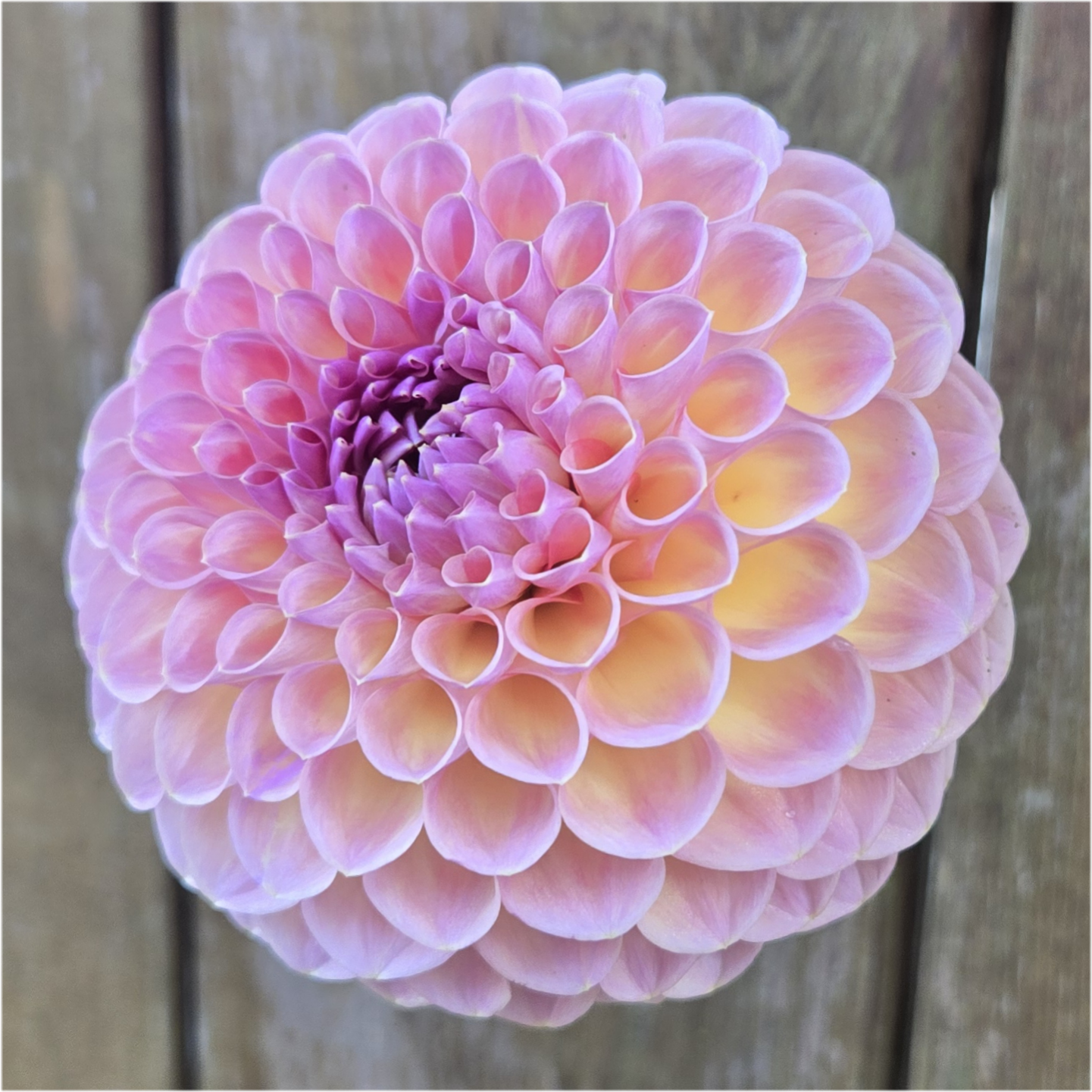
Form: Ball (BA). This dahlia is the epitome of the Ball form, featuring tightly inrolled, neat rows of petals that create a dense, almost perfectly spherical bloom. The orderly arrangement gives the flower a polished, structured look.
Color: A beautiful, multi-toned blend of Pink, Peach, and Mauve.
- It is often described as a smoky pink, dusky rose, or soft salmon-pink.
- The color deepens toward the center, often having peachy-coral or apricot undertones that make it glow as if lit from within, giving it an ombré or sunset effect.
- Some descriptions include hints of lavender or violet at the petal edges.
Bloom Size: Small (BB) to Medium (BA), typically measuring 4 inches (10 cm) in diameter.
Height: A robust and tall plant, commonly reaching 3.5 to 4 feet (100–120 cm) in height.
Performance:
- Prolific Bloomer: 'Jowey Winnie' is celebrated for being an extremely vigorous and highly productive dahlia, churning out an abundance of blooms all season long.
- Cut Flower Quality: It has long, stiff stems that are perfect for cutting. Its tight, durable ball shape gives it an excellent vase life (around 5 days) and makes it weather-resistant.
- Versatility: The harmonious blend of warm (peach/coral) and cool (pink/mauve) tones makes it a chameleon that pairs beautifully with a wide range of colors in bouquets, from deep purples to bright oranges.
Please note that the listing is for one tuber.
- We guarantee you will receive a viable tuber true to variety, with an eye and healthy neck. Please examine your order immediately upon arrival and contact us via email (not social media) within 7 days if you see an issue with your order. After that 7 days the buyer accepts full responsibility for the tuber as we cannot be held responsible for improper storage, weather, growing conditions, pest damage, plant performance, failure to thrive or negligence.
Share