Makayla's Meadows
Hapet Champagne
Hapet Champagne
Couldn't load pickup availability
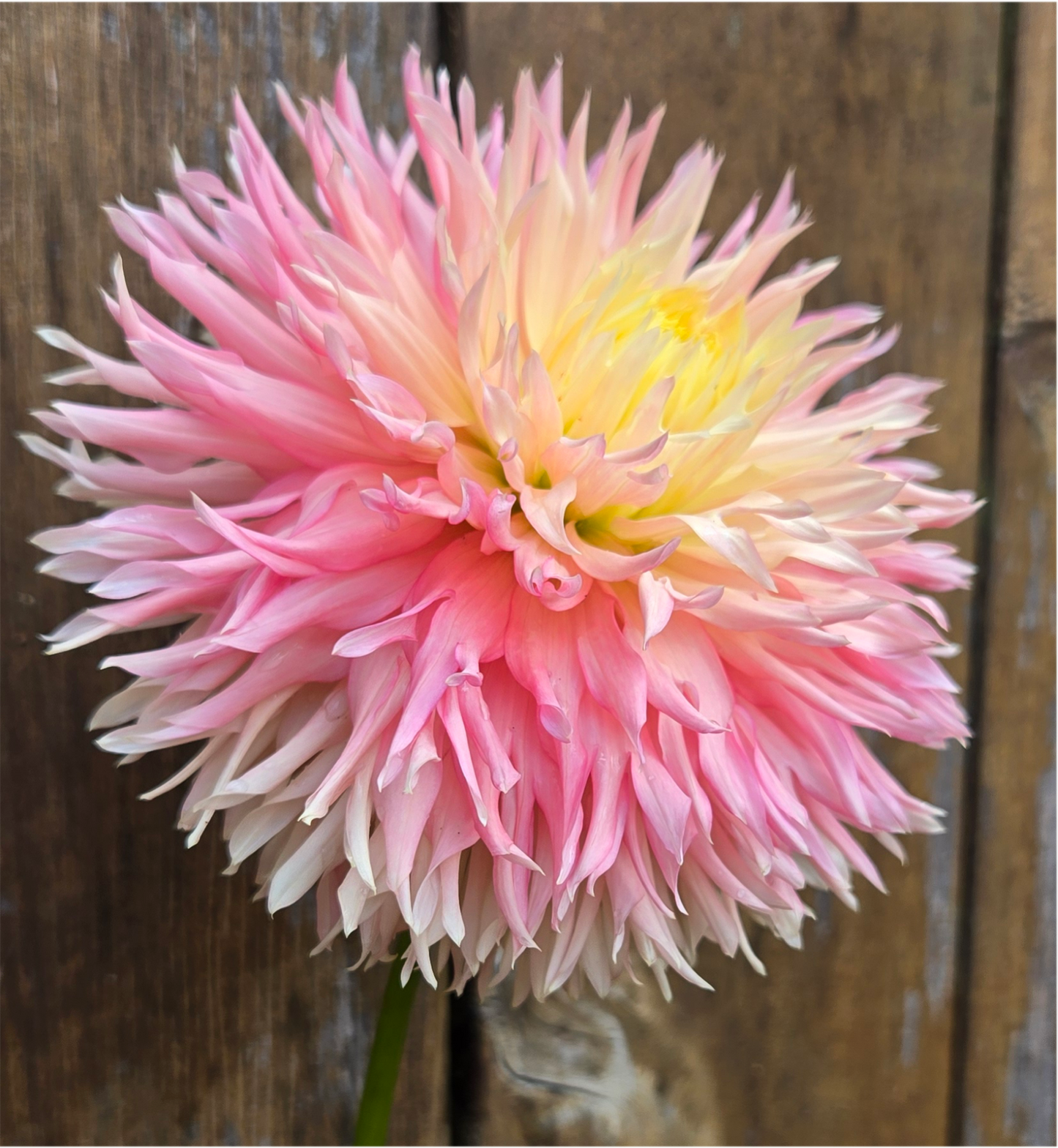
Hapet Champagne is another standout in Peter Haslhofer's 'Hapet' series, and it is particularly noted for its unique form and elegant, celebratory color blend.
Characteristics:
Form: Laciniated (LC). This is a distinctive form where the tips of the petals are split, notched, or deeply fringed, giving the bloom a soft, shaggy, or feathered texture. It's sometimes classified as Fimbriated (Fim), a similar term used by some international societies.
Color: Light Blend (LB) of Peach, Apricot, and Yellow. The color truly reflects its namesake:
- A warm champagne or soft apricot-pink that washes over the petals.
- The center or base of the petals often holds a contrasting creamy lemon yellow or sorbet tone.
- The overall effect is a glowing, light, and complex blend that is highly desirable for floral design.
Bloom Size: Medium (B), typically 6 to 8 inches (15–20 cm) in diameter.
Height: A sturdy and tall plant, reaching 4 to 5 feet (120–150 cm).
Performance:
- Exceptional Texture: The laciniated (fringed) petals add incredible fluffiness and texture to the medium-sized blooms, making them luxurious and unique in a bouquet
- Strong Stems: Despite its fluffy form, 'Hapet Champagne' is known for producing blooms on long, strong stems, making it an excellent and popular choice for cutting.
-
Versatility: The light blend of peach and yellow makes it a versatile partner in arrangements, pairing well with everything from deep burgundy to pure white and bright coral.
-
Performance: It is known to be a strong grower and a good producer of both flowers and tubers.
Please note that the listing is for one tuber.
- We guarantee you will receive a viable tuber true to variety, with an eye and healthy neck. Please examine your order immediately upon arrival and contact us via email (not social media) within 7 days if you see an issue with your order. After that 7 days the buyer accepts full responsibility for the tuber as we cannot be held responsible for improper storage, weather, growing conditions, pest damage, plant performance, failure to thrive or negligence.
Share